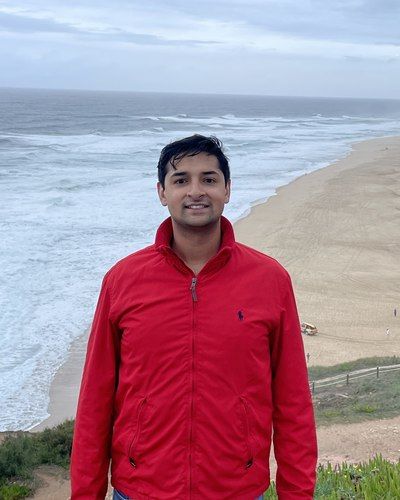
I build AI systems for workflows that cannot afford to be wrong.
AI Solutions Engineer at WebMD / Medscape. I built BuildDiff, a deterministic comparison platform now in production for medical-legal content review. It cut missed editorial edits by 90% and saves $300K a year. Before that, eight shipped AI workflows returning 12,177 hours annually.
BuildDiff
A deterministic comparison platform for regulated web content
Copyeditors, QA validators, and front-end developers at Medscape were reviewing web builds by hand, checking text, styling, markup, images, layout, and tracking links across versions. A missed editorial edit in a medically regulated environment is a compliance problem, not a typo.
I designed and built BuildDiff to replace the legacy tooling and the manual passes around it. It compares live URLs and HTML files across six layers and presents results through Visual, Source Code, and Overlay views, with export to marked-up PDF and post-merge HTML. It runs in production today.
The comparison engine is fully deterministic. In a medical-legal workflow, results have to be reproducible and explainable before anyone will act on them. The AI layer, LangGraph triage and plain-language summarization, sits on top of that engine, read-only, and never as the source of truth.
Layout, image, and markup changes are washed in amber directly over the rendered page.
Line-level HTML and text diffs render side by side for exact review.
Perplexity Enterprise Pro. Eight shipped workflows, 12,177 hours
Rolled out an enterprise AI platform to 100+ active users, then built the eight workflows that made it stick
What I build
I write the pipeline, the comparison engine, the agent, the integration. Deterministic where the workflow demands reproducibility, model-driven where judgment helps. Then I get it hosted, in whatever environment the company actually has rather than the one I would pick.
BuildDiff →A system nobody trusts is a system nobody runs. I sit with the reviewers, editors, and analysts whose work changes, learn what they have to be able to verify, and build the tool and the training around that.
Perplexity rollout →Most of the value is not in the model. It is in cutting the four manual steps around it. I take apart the existing process, find where the handoffs break, and rebuild the sequence so the system has somewhere to fit.
Legal research workflow →I build AI systems for enterprises that cannot stop working while I build them.
Most of my work happens inside regulated content and research workflows at WebMD and Medscape, where a missed editorial edit is a compliance problem and a hallucinated citation is worse. That constraint shapes the architecture. On BuildDiff, the comparison engine is fully deterministic, because copyeditors and QA validators need results they can reproduce and explain. The AI layer sits on top, read-only, doing triage and summarization. It is never the source of truth. Deciding where the model does not belong is usually the more important design decision.
The other half of getting a system into production is knowing what it has to do before you build it. I start with the person whose job is about to change and find out what they check, what they are afraid of getting wrong, and what they would have to see to trust an output. On BuildDiff that meant sitting with proofreaders. On the Health Accreditation project it took five prompt iterations before the tool was usable, because each iteration was really a requirements conversation. When a legal stakeholder tested Perplexity against Lexis and concluded it was broken, the useful move was not defending the tool, it was asking what research work lives outside of Lexis and eats a week. That question produced a project returning 1,976 hours a year.
Most of what I do maps to what labs and startups call forward deployed engineering. I came to it through analysis and program management before engineering, which is why I am comfortable in the room where the work happens and in the codebase where it gets fixed. Johns Hopkins EE, B.S. and M.S., machine learning for signal processing. Perplexity Business Fellow, 2025.
Career
Four roles. Each one taught me something the next one needed.
Build production AI systems for regulated content and research workflows. Designed and built BuildDiff, a deterministic multi-layer comparison platform now running in production, replacing legacy QA tooling across copyediting, QA validation, and front-end development: 90% fewer missed editorial edits, $300K in annual savings. Rolled out Perplexity Enterprise Pro to 100+ active users across seven business units and shipped the eight workflows behind it, returning 12,177 hours annually. Built an autonomous M&A due-diligence agent that scores 13 technical dimensions in a 33-minute run, against a manual process that took six weeks to six months.
Shipped software and process systems across 4 teams in digital healthcare advertising environments, owning delivery from requirements through production handoff. Worked between engineering, product management, and business operations to get systems past the integration and compliance obstacles that stall internal tools. This is where I learned that the hard part of an enterprise system is rarely the code, it is in the people.
Delivered analytical systems directly to government clients, owning requirements, build, presentation, and the accountability that follows a system into production. Learned to translate what a client says they want into what their workflow actually needs, which is the skill every solutions engineering role depends on and most engineers never get trained in.
Built a proof-of-concept for an AI meeting-transcription app. First production code I wrote.
Hire me
I am looking for AI Solutions Engineer roles, including forward deployed engineering roles, at AI labs, AI startups, and enterprise AI companies.